audience activator press release
How is this different from simply retargeting someone on Google or Meta?
The key distinction: Last Mile Audiences extends the engagement signal beyond the originating platform, letting marketers activate those addressable audiences across additional channels within Nexstar's Audience Activator.
Why would I want to reach someone outside the platform where they clicked?
Because engagement doesn't necessarily mean the person is ready to convert immediately. Continuing the conversation across additional channels helps marketers stay connected throughout the consideration process.
What happens if someone doesn't convert after clicking?
That engagement can become an audience signal marketers use for additional activation, rather than treating the interaction as the end of the journey.
Do I need another audience platform?
Last Mile Audiences is built directly into Nexstar's Audience Activator and surfaced through the Audience Library and AI Media Agent.

Welcome to the Sams Club
A place where you can get first looks at the latest tools, new ideas and go a bit deeper to help your markets level up with digital sales!
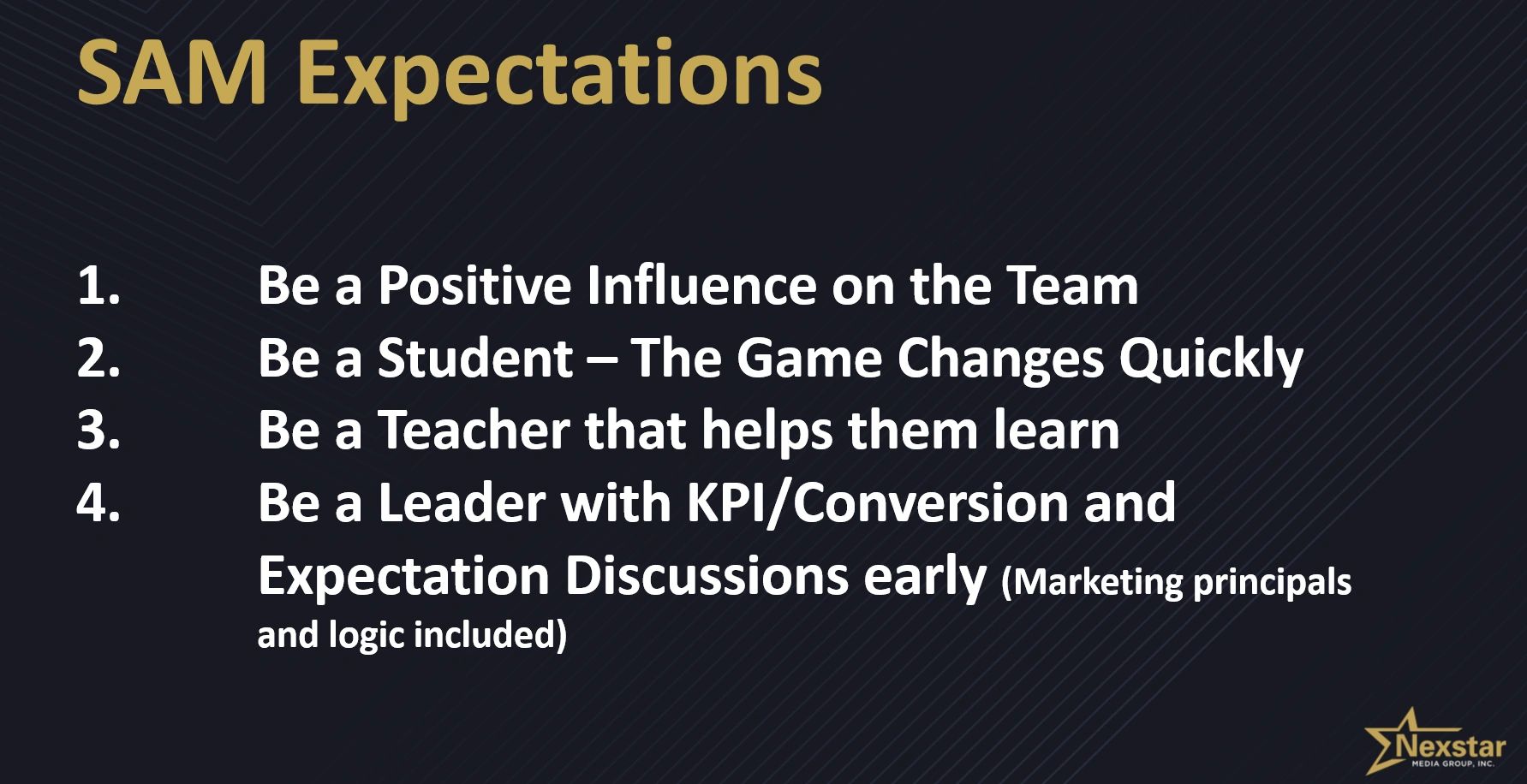
Positive Influence
Things don't always go smoothly with digital tactics & campaigns. We must stay positive and keep the team focused on solutions to problems instead of the problems. This will help for future campaigns instead of having them never want to try it again with clients.
A Student of the Game
Things move fast with all things digital. New tactics, new vendors, platforms, reports, etc. It's up to us to be the students that jump in right away to learn everything we can, to build trust with our teams internally and with clients externally. This includes new concepts and ideas we may see outside of the company. Even if we don't sell it, you should be aware of where things are moving.
Teach with Patience
Not everyone on your team understands how fast digital is moving. They also may struggle with things you consider "simple", but we must remain patient and continue to try and teach them from where they are. Everyone can be elevated at different levels and it's your job to help that happen so that you don't lose anyone along the way.
New Capabilities alert
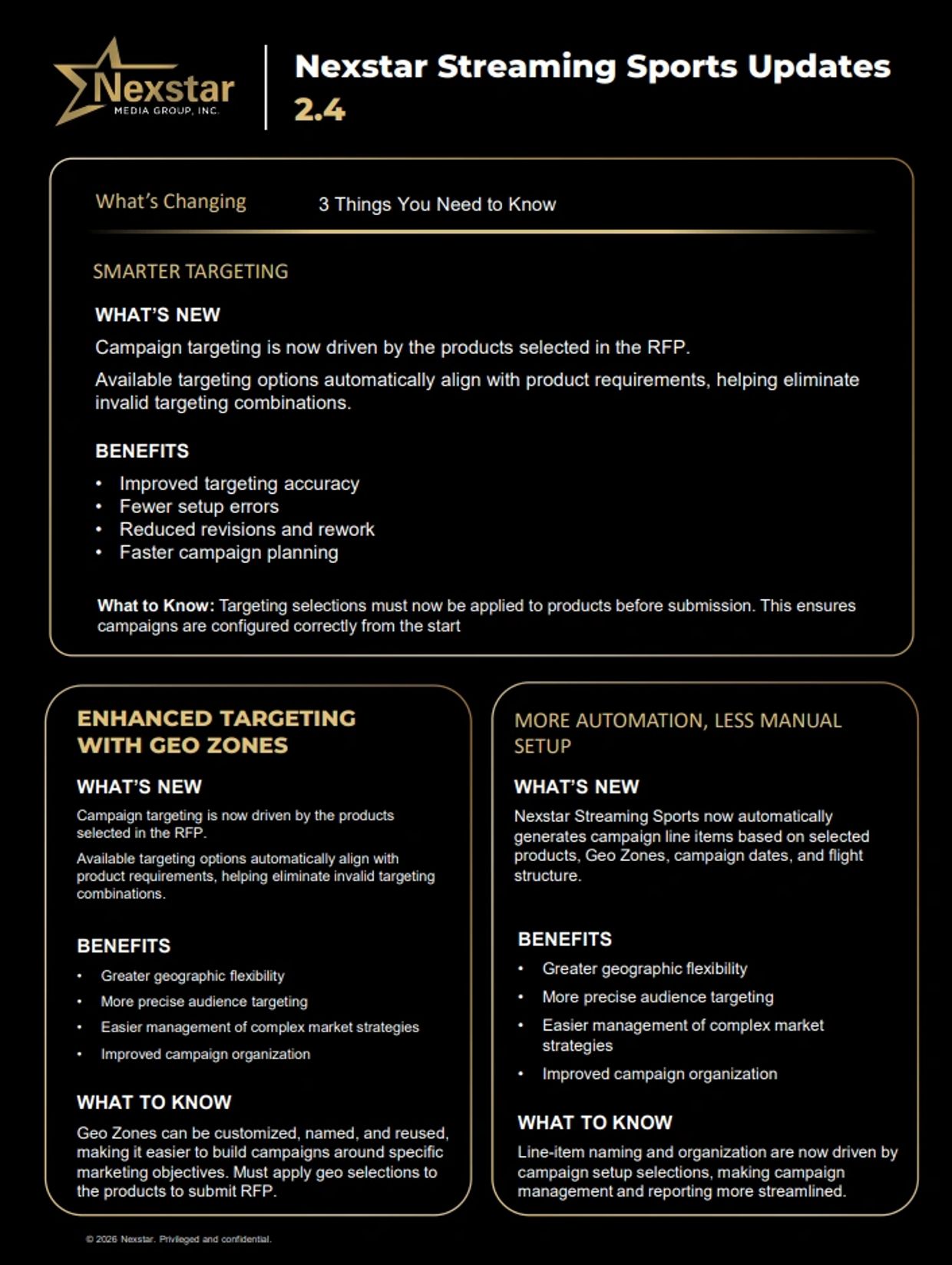
New Capabilities alert
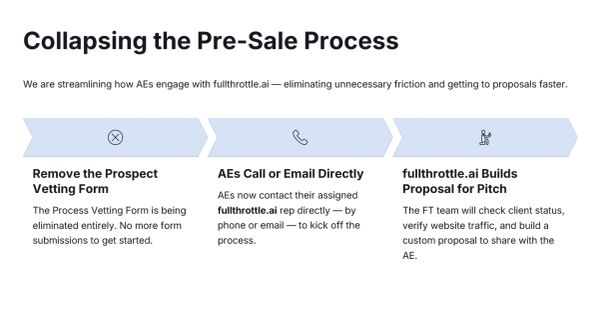
New Audience Activator Process
Great changes are happening with our ability to sell Audience Activator faster and more effectively to clients. We will talk more about it on our SAM call, but for now here's the sneak peak at the link below. In addition, our Strategist assigned to the region is Tyree Hicks-Perkins who is fantastic. Questions on a deal before we have our call, please reach out to me for clarification.
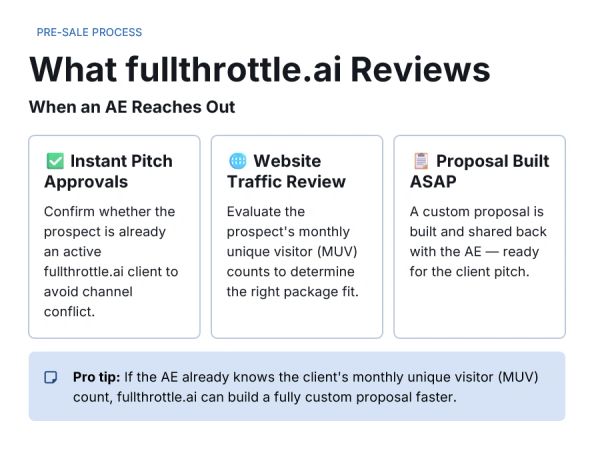
New Capabilities alert

ACR Overlap Report
We’re excited to introduce ACR (Automatic Content Recognition) Reporting, a powerful way to show advertisers exactly how their campaigns are performing across linear and OTT/CTV.
ACR Reporting uses smart TV data to identify what content households are watching, whether live, streamed, or on-demand, and determines which ads they’ve been exposed to. This gives a clearer and more accurate view of real audience behavior and campaign impact. ACR Reporting allows us to tell a stronger data-backed story about how multi-platform strategies drive results.
This exciting reporting will:
- Show true reach and frequency across both Linear and OTT/CTV.
- Identify audience overlap vs. incremental reach between platforms.
- Provide a more complete view of how campaigns work together, not in silos.
- Give advertisers confidence in cross-screen investment decisions.
What you need to know:
- ACR can be added to OTT campaigns through the Platform X proposal builder.
- Clients must be running OTT/CTV through Platform X and any linear broadcast which includes broadcast (through Nexstar or another broadcaster) or cable TV .
- To add, check the checkbox in the Details button of the proposal budget page.
- Reporting is delivered monthly, with additional reports available upon request. Reporting is not currently available in the Platform X dashboard.
- Outputs include key metrics like unique reach, impressions, frequency, and overlap insights across platforms.
- Additional conversion data is available using a standard tracking pixel generated from the Platform X IO.
- There is a $3 CPM premium applied to campaigns using ACR Reporting.
- A one-sheet and reporting overview document are included at the end of this message.
Advertisers should position ACR as proof. It helps move beyond “we think this works” to “here’s exactly how your campaign performed and where your audience comes from.”. It’s especially effective when selling combined linear and OTT/CTV strategies, reinforcing the value of reaching audiences both broadly and incrementally.
If sellers have questions about ACR Reporting or want help incorporating ACR Reporting into their sales approach, reach out to Platform X CSM at support@nexstardigitalservices.com.
***Please note, ACR Reporting is NOT being rolled out in the following markets and will not appear in the Platform X platform. The volume in these markets does not support an accurate result.
KREX, KSAN, KTAB, WBOY, WDHN, WETM, WFXV, WIVT, KSVI, WJTV, WWTI, WNTZ
Streaming Football

Real Talk
We now have the hottest ticket in the advertising world with guaranteed in-game football avails for NCAA and NFL. Things are moving fast and some markets are working hard to get packages out before the competition. Yes, you may run into competitors that have the same or similar offerings. Most we may be priced better, but some we may not. Steer clear of transactional buyers if you can and sell to direct clients that have a passion for football.
The impressions pulled are per client and for the season. You don't have to sell all of them to a client, and in some markets and cases, you could divide those impressions up between several clients. Just know, the available impressions may be taken by another source until you lock them in with a sold package. Work with your sales leaders to help them package the impressions in the best way to get it sold quickly. We are learning with this first season and will know much more next year how we can manage those available impressions, narrowing to game and conference packs, etc.
NBC STATIONS - NFL STREAMING INFO
If you missed the NBC call or can't remember some of the details, deadlines or where materials are, use this link to the NBC dropbox with everything needed.
World Cup Reporting Example
Austin graciously shared an example of a FIFA report that they had some AI help to reformat for aesthetics, but you can see what detail was provided.
Amazon Event Tag - A MUST DO!
Using GTM to Setup 1 Tag With Multiple Events
That's right, up to 10 events with one tag! This is how you unlock the metrics and conversions that matter. Instead of the default vanity metrics that make for hard conversations during reporting time, let's push to get these on ALL of our campaigns. It takes 10 minutes to setup and you can get conversions on everything from click to call to chat bots and more. I'm seeing too many IQX campaigns that don't have any tags setup and that is a shame given the tools we have. Once you do, you'll unlock so many more visual discussion points for your reporting calls.
Click on the "Ad Tag Placement Guide" to download a copy of step by step instructions.

A Level Deeper

Data Security & Compliance - Full Throttle

As we continue to get more sophisticated questions about privacy with Amazon and Full Throttle's tech stack and data, let's make sure we are prepared to answer some of those concerns.
Healthcare Advertising Challenges
Managing Traffic with HIPAA
Healthcare organizations often see more irregular traffic patterns in Google Analytics than other industries. In most cases, this isn’t a sign that something is wrong with the campaigns. It’s usually the result of a few structural things that are more common in healthcare — stronger privacy protections, automated compliance reviews from ad platforms, and a higher volume of bots and crawlers interacting with medical content.
Below are a few of the most common factors that can affect what you’re seeing in analytics.
1. Privacy and HIPAA-Related Data Protections Can Alter Analytics Signals
Healthcare organizations increasingly use privacy middleware and server-side tracking solutions to reduce the risk of sharing Protected Health Information (PHI) with analytics platforms.
These tools are designed to protect patient privacy, but they can also change how traffic appears inside analytics platforms.
In practice, these systems may:
- Mask or remove IP addresses
- Route traffic through secure proxy servers
- Send analytics events from server locations rather than the user’s true location
- Delay or replay tracking events
How this can appear in analytics:
- Traffic showing up from unexpected geographic locations
- Sessions originating from cloud infrastructure rather than consumer internet providers
- Duplicate or very short sessions
Sources
HHS guidance on tracking technologies and HIPAA:
https://www.hhs.gov/hipaa/for-professionals/privacy/guidance/hipaa-online-tracking/index.html
Freshpaint overview of HIPAA-compliant analytics infrastructure:
https://freshpaint.io/blog/hipaa-compliant-analytics
RudderStack guide to HIPAA-safe analytics architecture:
https://www.rudderstack.com/blog/hipaa-compliant-customer-data-pipelines/
2. Advertising Platforms Regularly Scan Healthcare Landing Pages
Advertising platforms routinely run automated policy reviews and compliance scans, especially in regulated industries like healthcare, pharmaceuticals, and medical services.
These automated crawlers check landing pages for policy compliance and can sometimes trigger page loads that appear in analytics reports.
Common characteristics include:
- Sessions originating from cloud hosting regions (AWS, Google Cloud, Azure)
- Very short sessions with little or no engagement
- Periodic spikes when ads are reviewed or re-crawled
Sources
Google Ads landing page policy review process:
https://support.google.com/google-ads/answer/2404190
Meta advertising review and policy enforcement:
https://www.facebook.com/business/help/968402779873601
3. Healthcare Content Is Crawled More Aggressively
Medical and healthcare content tends to attract more automated crawling and scraping than most other categories online.
This traffic can come from:
- Search engines indexing health content
- AI training datasets collecting public medical information
- Competitive intelligence tools
- SEO and auditing platforms
Because healthcare information is high-value and highly searched, these crawlers can generate more bot traffic than typical local business websites.
Sources
Imperva Bad Bot Report (global bot traffic trends):
https://www.imperva.com/resources/resource-library/reports/2024-bad-bot-report/
Cloudflare overview of bot traffic on the internet:
https://www.cloudflare.com/learning/bots/what-is-bot-traffic/
Use of Online Tracking Technologies by HIPAA
https://www.hhs.gov/hipaa/for-professionals/privacy/guidance/hipaa-online-tracking/index.html
It is also worth noting that this pattern can be somewhat more visible when traffic originates from programmatic display (banner) or Connected TV (CTV) campaigns.
Programmatic advertising environments rely on a number of automated systems that routinely review ad creatives and associated landing pages. These systems can include brand safety scanners, ad verification platforms, fraud detection tools, and exchange-level policy crawlers. In regulated categories such as healthcare, these reviews may occur more frequently to ensure that ads and landing pages comply with platform policies and industry standards. In some cases, these automated systems will load the landing page to confirm that the destination content matches the ad creative and is functioning properly. When this occurs, the page load can appear in analytics even though no consumer actually visited the site.
Similarly, Connected TV advertising often relies on server-side ad insertion and delivery infrastructure operated by streaming platforms and ad exchanges. Because these ad calls and measurement signals are frequently routed through centralized server environments, the geographic information associated with a visit may sometimes reflect the location of the platform’s server infrastructure rather than the viewer’s household device.
As a result, it is not unusual for display or CTV campaigns—particularly in regulated industries—to generate some short sessions, cloud-hosted traffic signatures, or geographic anomalies in analytics data, even when campaign performance and consumer engagement are functioning normally.
Sources
IAB Tech Lab overview of ad verification and programmatic quality controls:
https://iabtechlab.com/standards/ad-fraud/
Interactive Advertising Bureau guide to Connected TV measurement and infrastructure:
https://www.iab.com/insights/guide-to-ctv-measurement/
Google Ads landing page and ad review process:
https://support.google.com/google-ads/answer/2404190
Ad Fraud Disclosures
Ad Fraud Disclosures Last updated: July 27, 2020 Over the years we have seen multiple and diverse types of ad fraud attacks, all of which negatively impact the digital advertising industry overall....
iabtechlab.com
